
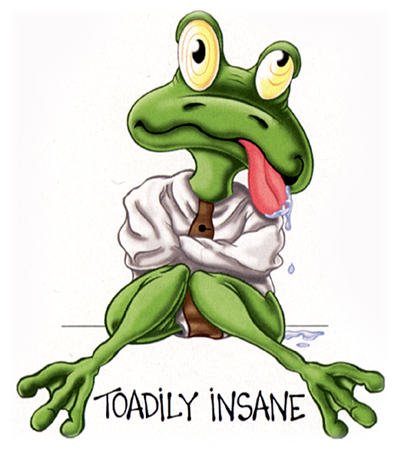
First things First, the review and revision process is invaluable. I get the important feedback that not only improves my report writing, but fosters my education in the professional field. The idea is that I submit a draft report, well before it requires date, so that it can be reviewed and commented on. This then comes back to be so I can make the needed changes and submit it again (before it is due). If my changes are in need of correction we still have time to make such adjustments. Then the report can go out the door and everything flows well.
Here is the problem. I am submitting reports and getting feedback on them, making the corrections, and then getting additional feedback on areas that were previously designated as needing no changes. Then when the second corrections are made, additional changes are requested, again in areas that were previously fine.
I have an issue when I submit a report, get feedback, make the corrections, re-submit the report, and then get more corrections on things that were originally fine. This type of feedback results in a great deal of wasted time and energy. It also results in massive number of iterations of reports that tend to cause damage to self-esteem (e.g., I just made a bunch of corrections to this report, how can it need another round of huge changes?) The problem is compounded by a significant delay in receiving feedback. For example, an change in text may be requested 3-4 weeks after the report is submitted, but in that time frame 3-4 other reports have been submitted using the original (text of error), hence the same correction needs to be made repeatedly. This could be caused by a number of sources, so I will enlighten you as to the areas I have examined.
First, this could be caused by a hasty original review. Thus, some of the difficulties could have been overlooked. I would expect this type of issue to crop up from time to time, but if systemic there is a significant problem. If one assumes that errors are eliminated after one or two corrections, then it should be that the either the frequency of the issue decreases. Additionally, an overly hasty review should flag only a few items per review. Hence three review iterations with huge amounts of corrections would not be characteristic of such a process. Finally, even this process should result in an overall decrease in needed corrections. None of the symptoms have been observed.
Second, this could be caused by very poor report writing. I am willing to acknowledge that being thrown into a new situation as this is, I may have significant deficiencies in my writing. As I have been making acceptable grades and have been able to improve or make adjustments in my writing, it stands to reason that I could do so here. In this setting that would look like many needed corrections at first, but a gradual decrease in needed corrections over time. This has not been observed, as some of my very early reports went through many fewer iterations than some of the current ones.
Third, this could be the result of increasing expectations. In this case the writing bar may be raised (either continually or in from time to time). This would result in a greater level of scrutiny of the reports after a period of time, this could appear as more corrections needed on later reports after the bar has been raised. This does explain some of the feedback results, but not the multiple iterations problem. Additionally, this may result in poor overall performance as something may be integrated as acceptable then suddenly becomes unacceptable, thus resulting in confusion, frustrations, and potential misunderstandings.
Yet another possibility is that the reviewer wishes to make the most of the learning opportunities and thus make a number of comments whenever possible. This would result in the greatest degree of information being communicated back to me, but also runs the risk of being information overload or confusing. This would be especially problematic when the feedback is inconsistent and contradictory. This would have the appearance of multiple revisions and of significant quantities as we see, but when the changes are inconsistent or contradictory the advantage of maximum feedback is lost. This is being observed.
A fifth options, is that the review is somewhat fickle in their reviews. This is to say that the criteria or standards are being constantly changed. This would likely manifest as a section being acceptable one day and unacceptable another day. Hence multiple iterations would result in multiple corrections in diverse sections. When examining semantic problems in this option, text revisions will likely appear from draft to draft or between reports that make one version acceptable and the next unacceptable.
If one utilizes Occam’s razor then the fifth option is the most likely, as it most simply explains the results. As a social scientist I know that people are rarely single in purpose or design. Thus I am forced to conclude that all of the above postulates are significant. Additionally, there are likely a number of other factors also at work. This is what makes this problem so powerful. I have a percentage of the issue upon my shoulders, and I wish to limit or reduce the errors made. Thus I need to see fewer corrections upon my work, or in-lue-of that greater feedback on the process of becoming a better writer.
So here I am. I feel pretty bad about my situation. I keep reminding myself that I am getting lots of assessment experience AND report writing experience. Additionally, I have a prestigious name for my resume. I am a big boy and can deal with problematic feedback. I was just hoping for more!
Wednesday, February 18, 2009


Subscribe to:
Posts (Atom)